

Qdrant
Configure your own Qdrant instance as data sink.
Configure via UI
Section titled “Configure via UI”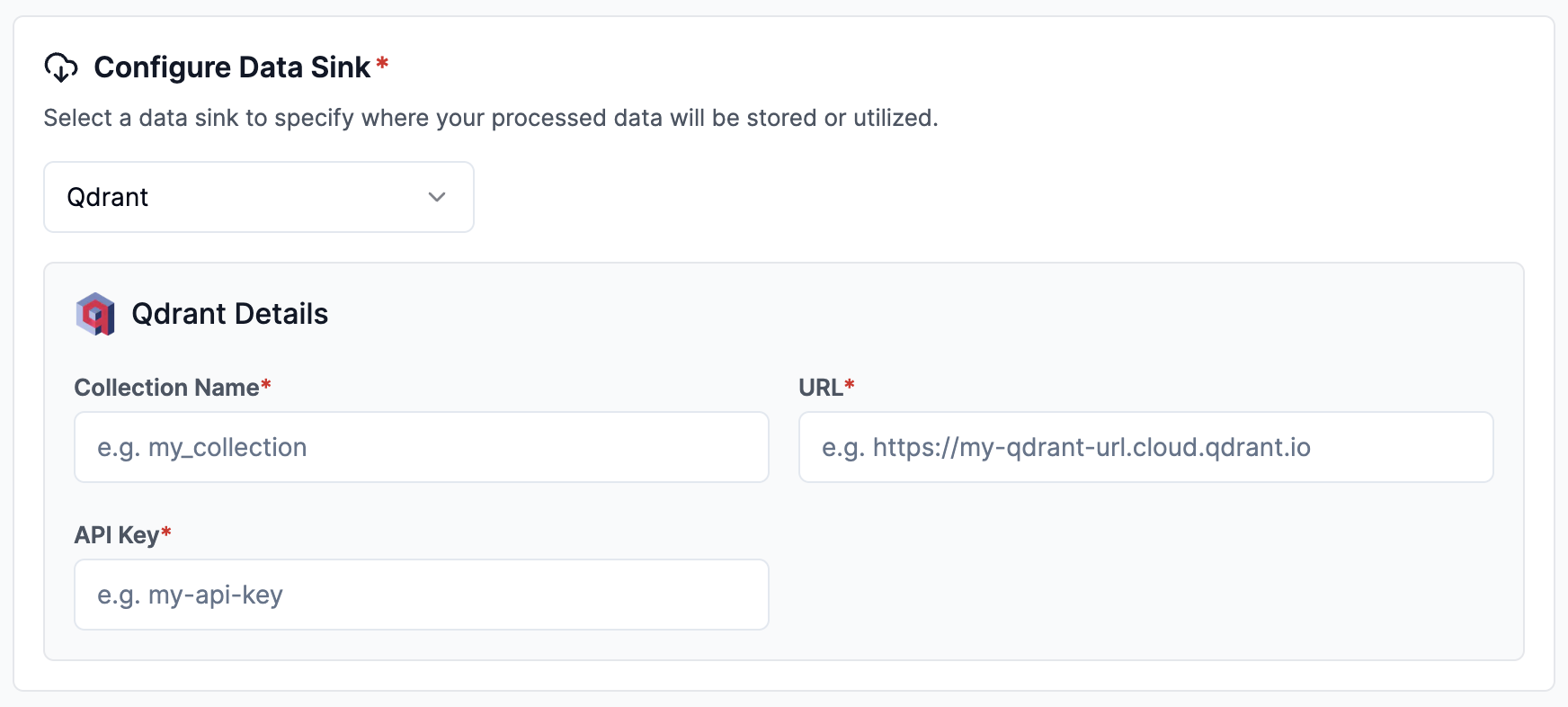
Configure via API / Client
Section titled “Configure via API / Client”from llama_cloud.types.data_sink_create_params import ( CloudQdrantVectorStore,)
data_sink = client.data_sinks.create( name="my-data-sink", component=CloudQdrantVectorStore( api_key='<api_key>', collection_name='<collection_name>', url='<url>', max_retries='<max_retries>', # optional client_kwargs='<client_kwargs>' # optional ), sink_type="QDRANT",)const dataSink = await client.dataSinks.create({ name: 'my-data-sink', component: { api_key: '<api_key>', collection_name: '<collection_name>', url: '<url>', max_retries: '<max_retries>', // optional client_kwargs: '<client_kwargs>' // optional }, sink_type: 'QDRANT',});from llama_cloud.types import CloudQdrantVectorStore
ds = { 'name': '<your-name>', 'sink_type': 'QDRANT', 'component': CloudQdrantVectorStore( api_key='<api_key>', collection_name='<collection_name>', url='<url>', max_retries='<max_retries>', # optional client_kwargs='<client_kwargs>' # optional )}data_sink = client.data_sinks.create_data_sink(request=ds)const ds = { 'name': 'qdrant', 'sinkType': 'QDRANT', 'component': { 'api_key': '<api_key>', 'collection_name': '<collection_name>', 'url': '<url>', 'max_retries': '<max_retries>', // optional 'client_kwargs': '<client_kwargs>' // optional }}
data_sink = await client.dataSinks.createDataSink({ projectId: projectId, body: ds})